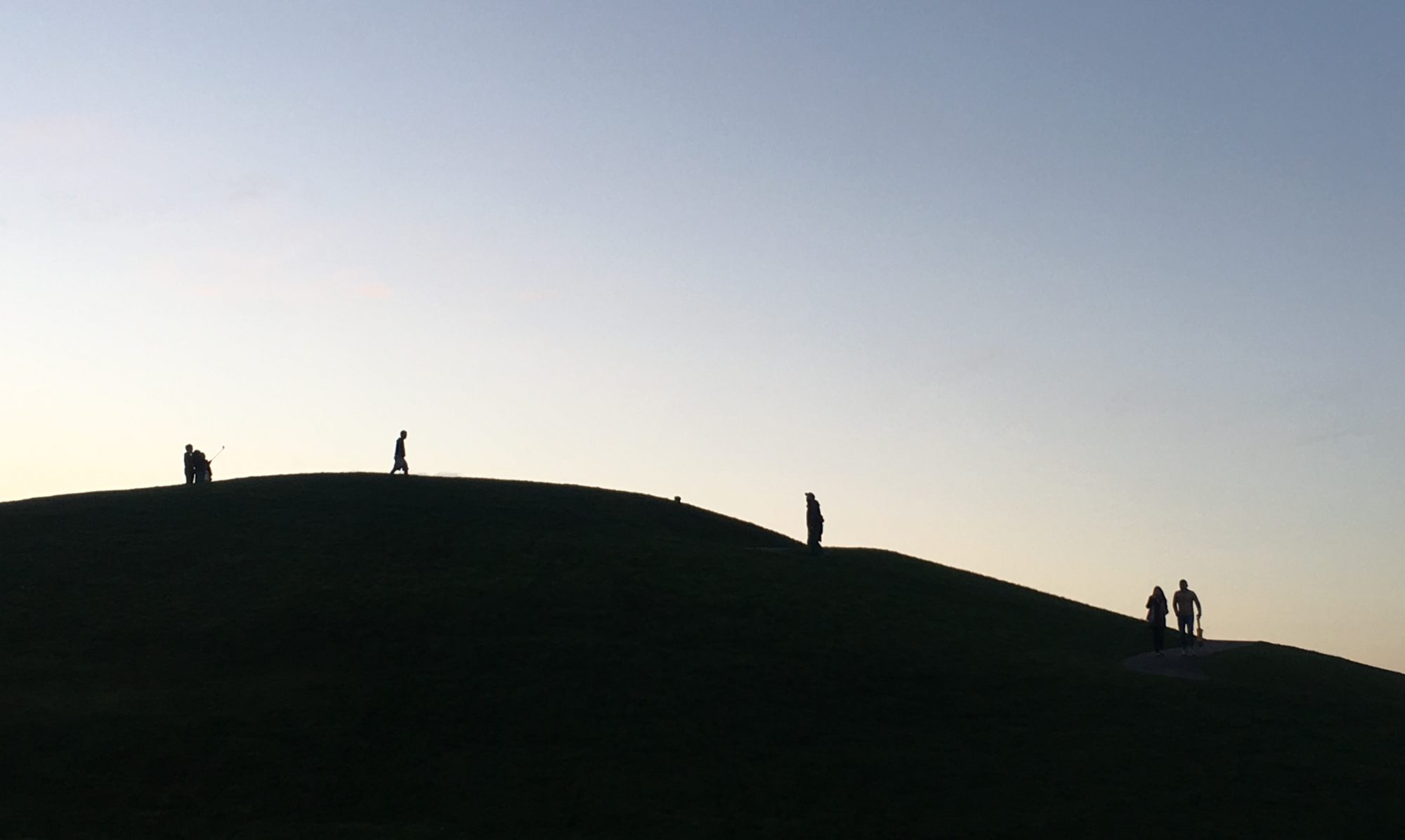
There is an ancient Indian story about a frog that lived in a well – Kūpamaṇḍūka – and for this frog the small well was all that was the case, it was the whole of the frog’s world. When a visiting frog told of the vast size of the ocean, much greater than the little well, the frog in the well dismissed the story as a lie. What the frog in the well did not know first-hand, the frog in the well could not conceive. It is a good story, with plenty of contemporary resonance.
We might describe the frog in the well as being provincial, meaning that it exhibited the character, and in particular the narrowness of view, that is associated with those who inhabit the provinces and lack the polish and sophistication of those who live in the metropole. Along with conflict between the generations, this is one of literature’s great themes: the resistance of those who know very little of the world to the wisdom of those who know much more, and of the comfort that is to be had in living in a small well-like world in which everything is fixed and familiar. Several books that I have recently read play with this theme, of the clash between those who are – or, at least, who think they are – sophisticated and cosmopolitan, and those who are – knowingly or not – determinedly narrow and unpolished.
When George Eliot published Middlemarch in 1871, she gave her novel the subtitle, A Study of Provincial Life. Re-reading the book earlier this year, I was struck by the extent to which the choices made by her leading characters are constrained by the attitudes of their neighbours, and by the extent to which these local attitudes are conservative, petty, and inconducive to happiness. The two characters who are genuinely well-travelled and well-educated – Tertius Lydgate, the Paris trained doctor who is new to the town, and Will Ladislaw, the second cousin of Dorethea Brookes’ first husband, later to become her second husband – are both regarded with deep suspicion by the local gossips, who operate in the novel somewhat like the chorus in a Greek tragedy, although the wisdom they dispense amongst their fellow townsfolk is mostly comprised of prejudice and hearsay. Newcomers, like new ideas and new railway lines, are treated with instinctual distrust.
Given the hostility that George Eliot faced in her own life, in response to what in those days were highly unconventional choices for a woman to make concerning her career and domestic arrangements, one can sense in the novel her delight at being able to parody the foolishness of innumerable English frogs, who dwelled deep inside their narrow nineteenth-century wells. However, great novelist that she was, Eliot avoided drawing her cosmopolitan characters too kindly, and she is careful not to allow their wider knowledge of the world to prevent them from making occasional foolish choices. Having a broader outlook – a deeper understanding of science, in the case of Lydgate, and of the arts and politics, in the case of Ladislaw – does not make for perfection, nor for an easy life. Instead, her well-travelled frogs, like Eliot herself, are forced to endure the ridicule of others while struggling to make a better, more tolerant life for themselves and for those close to them.
This week, I have just finished reading the first two parts of Jon Fosse’s lengthy Septology, published in 2019. Fosse is primarily known as a playwright, but the early volumes of this meditative story, written in slow prose, describe the thoughts of two ageing and solitary artists, one of whom lives in a small village on the Norwegian coast, a couple of hours drive from Bergen, where the other lives. I am three hundred and forty pages into the work and I am still reading the first sentence. Not much has happened other than the repetitive and pedestrian thoughts of the two protagonists, their brief and rambling interactions with a few other characters, and the recurrence of certain images and motifs from their memories. This is a novel with a distinct mood but no obvious plot.
The two main characters share the same name and are, perhaps, two possible versions of the same life. One of them is friendly with an old man who has lived alone his whole life in the small coastal village, where he catches fish, looks after a small-holding, and undertakes some modest work tasks for his artist neighbour. The fisherman looks at one of the artist’s paintings in progress and observes of the two lines – each of which runs from one corner to the opposite corner, and which cross in the centre of the canvas – that they show St Andrew’s Cross, an insight that he repeats confidently several times. The narrator observes that this is an instance of provincial pride, that is of knowing the correct name of a religious symbol without knowing what the symbol might mean in the painting. It is not clear that the two lines are intended to represent a cross, nor to suggest a religious theme, although the narrator is himself a religious man, unlike his neighbour. The point is simply that the fisherman is proud to have recognised the shape as a religious symbol, namely the cross on which Andrew, also a fisherman, was put to death.
Living one’s whole life in a small Norwegian coastal village might seem to be a perfect example of modern day provincialism, although the city of Bergen – referred to in the novel by its historic name of Bjørgvin – which is the second largest city in Norway, has only a modest population of fewer than three hundred thousand. What might seem a large and busy city to the fisherman is probably regarded as a provincial town by those who live in Oslo, and certainly by those of us who live in London. To a frog living in a small well, a medium sized well might seem large and sophisticated, whereas both seem small to a frog that has seen the ocean.
At some point between George Eliot and Jon Fosse came Chimamanda Ngozi Adichie’s latest novel, Dream Count. I’ve read several of her other books and, from the safe distance of London, enjoy her exploration of the theme of the competitive struggle between Nigerians who prefer to make their home in the United States and Nigerians who prefer to remain in Nigeria. Some of her characters find the American way refreshingly better than life in Lagos or Abuja, far away from corruption and burdensome family ties, whereas others find it unrefreshingly worse, with unpalatable doses of first world hypocrisy and detachment.
One of the characters in the story, called Omelogor, writes a regular blog called For Men Only, in which she offers sharp and well observed feminist advice to men, to help them become better citizens in a world of sexual equality. In one post, towards the end of the novel, she reflects on her time as a post-graduate student at an American university, and describes her disillusionment at the narrowness of the perspectives she encountered there: America is so provincial, like an enormous giant of a man from a bush village who blunders about with supreme certainty, not knowing he is bush because he is blinded by his strength. Most of her posts are designed to help men see the world through women’s eyes, to be aware of their biases and prejudices, and to consider the reasonableness of views and behaviour that they are tempted to caricature as irrational. In this post, Omelogor uses the same strategy to point out to the residents of a nation that thinks of itself as central to the world, that they are in reality peripheral: You Americans need to climb out of your cribs. You think the world is American; you don’t realise than only America is American. To be so provincial and not even know that you are.
Of course, the same could rightly be said of the English: we think we know the world, because we think we used to rule the world, but mostly we know very little. We now live likes frogs in ever-shrinking wells, dreaming of our glorious past, when we lived in slightly-larger wells.
At the start of his Romanes Lecture of 1998, Reason before Identity, Amartya Sen tells the following story: Recently, when I was returning from a short trip abroad, the Immigration Officer at Heathrow, who examined my Indian passport, posed a philosophical question of some intricacy. Referring to my address, viz. Master’s Lodge, Trinity College, Cambridge, he asked me whether the Master was a close friend of mine. This gave me pause since it compelled me, of course, to examine whether the binary relation of “being a friend of” can be taken to be reflexive, so that I could legitimately claim to be a friend of myself. Here, Sen is having a little joke at the expense at the provincialism of the British Immigration Service, which is quite understandable. But another way to read the story would be to imagine that the Immigration Officer was well aware of the provincialism of Cambridge colleges, and therefore deemed it highly unlikely that Professor Sen, however brilliant his mind, would be appointed Master at the grandest Cambridge college of them all. He might have known that not everyone at Trinity had shared G H Hardy’s admiration for Srinivasa Ramanujan, eighty years previously.
I mention Sen, because it was while I was reading a collection of his essays that I came across the story of Kūpamaṇḍūka which, provincial that I am, I had not previously been aware of. Sen himself is the most cosmopolitan of men: born in Bengal, he has lived and worked in England and the United States; trained as an economist, for which subject he won a Nobel prize, he has also written important work in philosophy and social theory and, as his essays demonstrate, he is knowledgeable about Indian history and literature too. If you look up lists of his publications and awards, they are both lengthy and distinguished.
Towards the end of his lecture, Sen remarks that nothing imprisons the mind as much as the false belief in an unalterable lack of choice and the impossibility of reasoning. One of the benefits of reading widely – in fiction as well as fact – is to discover the many ways in which others have understood and exercised their choices, and to learn to respect the different routes along which reasoning might lead us. All of us start out like the frog who lived in small well, but we can choose to explore beyond the confines and security of our home. We can visit other small wells, to discover variety, and if we are bold we can visit the ocean, to discover scale. We can choose to abandon provincialism and embrace the world.